
If there’s one thing I’ve seen expats in Japan consistently overlook, it’s the health checkup system. When a colleague of mine — a software engineer from Canada who’d been living in Shibuya for two years — mentioned he’d never had a single checkup since arriving in Japan, I wasn’t completely surprised. The system here is genuinely different from what most foreigners are used to, and if nobody explains it to you, it’s easy to assume your home-country habits apply here. They don’t. Japan has one of the most structured preventive healthcare systems in the world, and as a long-term resident, you’re actually entitled to far more than you might realize.
This health checkup guide for expats in Japan covers everything you need to know — from the types of checkups available, to costs, to where to go when you don’t speak Japanese.
Understanding Japan’s Two Main Types of Health Checkups

Japan separates health checkups into two broad categories, and knowing the difference will save you a lot of confusion.
Tokutei Kenshin (特定健診) — The Government-Mandated Checkup
Tokutei Kenshin, or the “specific health checkup,” is a subsidized annual screening program for anyone aged 40 to 74 enrolled in Japan’s national health insurance (Kokumin Kenko Hoken). As of 2026, this checkup is either free or heavily discounted depending on your municipality and insurance plan. It typically covers blood pressure, blood glucose, cholesterol, liver function, and BMI screening.
If you’re employed and covered by your company’s shakai hoken (社会保険), your employer is legally required under the Industrial Safety and Health Act to offer you an annual ippan kenshin (一般健診) — a general health checkup. This applies to all full-time employees, regardless of nationality.
Ninjin Dock (人間ドック) — The Comprehensive Option
Ningen Dock is Japan’s premium full-body health screening. The name literally translates to “human dry dock,” inspired by the idea of checking a ship’s hull thoroughly. These are not covered by insurance but offer a much deeper level of screening — think endoscopy, cancer markers, CT scans, and cardiac assessments. Prices typically range from ¥30,000 to ¥100,000+ depending on the clinic and package you choose.
I’ve spoken with several expats who assumed a standard checkup covered everything — it doesn’t. If you’re over 35 and haven’t had a comprehensive screening since arriving in Japan, a Ningen Dock is worth the investment.
Who Is Eligible for Subsidized Checkups in Japan?
Your eligibility depends on your residency status and insurance enrollment. Here’s a clear breakdown:
– National Health Insurance (Kokumin Kenko Hoken): Residents aged 40–74 qualify for free Tokutei Kenshin. Check with your local ward or city office for the exact process — in Tokyo, you’ll receive a notification letter (kenshin hyou) each spring.
– Company health insurance (Shakai Hoken): Your employer handles enrollment in annual checkups. HR is your first contact point.
– Under 40 or self-employed under 40: You won’t qualify for subsidized Tokutei Kenshin, but many local municipalities offer discounted basic health screenings (kihon kenshin) regardless of age. Check your ward’s health promotion division (hoken center).
According to the Ministry of Health, Labour and Welfare (MHLW), Japan’s checkup participation rates have been rising, with a national target of 70% coverage for Tokutei Kenshin under ongoing health policy reforms. As a resident, you’re part of that system — use it.
Where to Get a Health Checkup in Japan as a Foreigner
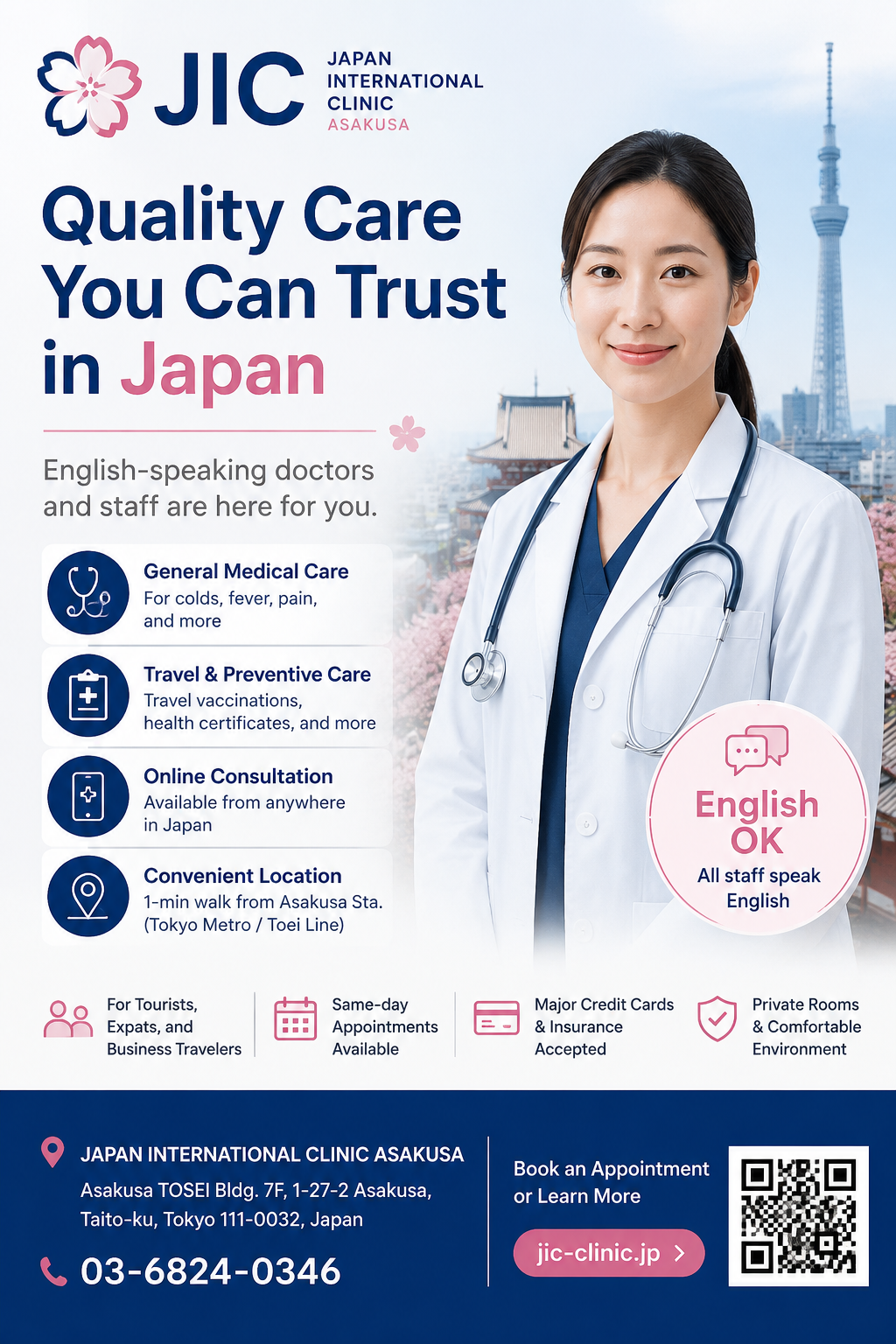
Finding an English-friendly clinic is easier than it used to be, especially in major cities.
English-Friendly Clinics and Hospitals
– Himawari Medical Clinic (Hiroo, Tokyo) — popular with expats, staff communicates in English
– Roppongi Hills Clinic — conveniently located, English-speaking doctors on staff
– St. Luke’s International Hospital (Tsukiji, Tokyo) — long considered the gold standard for international patients in Japan; offers comprehensive health screening packages in English
– AMDA International Medical Information Center — a nonprofit that provides multilingual health support and can help you find English-speaking clinics nationwide
Outside Tokyo, Osaka and Nagoya also have internationally oriented clinics. The JNTO (Japan National Tourism Organization) maintains a medical institution directory, which expats outside major cities can use as a starting point.
How to Book
Most clinics accept reservations by phone or online. For Ningen Dock screenings, booking 1–2 months in advance is common for popular clinics. Bring your health insurance card (hoken sho), a form of ID, and any previous medical records if relevant.
What Foreigners Often Get Wrong
Assuming your employer’s annual checkup is comprehensive enough. The standard company-provided ippan kenshin typically only covers the legal minimum — height, weight, blood pressure, chest X-ray, and basic blood work. It does not include colorectal cancer screening, endoscopy, or detailed cardiac tests. Many expats I’ve spoken to were genuinely surprised when they learned how limited it was.
Missing the municipal notification letter. In my experience supporting newcomers to Tokyo, one of the most common issues is that the kenshin hyou (checkup voucher) sent by the ward office gets discarded as junk mail or arrives while someone is traveling. If you’re over 40 and enrolled in Kokumin Kenko Hoken, contact your local ward office (kuyakusho) directly to request your voucher if you haven’t received one.
Waiting until something is wrong. Japan’s preventive health culture is built around catching issues early. Don’t wait for symptoms — that’s not how the system here is designed to be used.
FAQ
Can I get a health checkup in Japan if I’m on a short-term visa?
Subsidized checkups are generally for registered long-term residents enrolled in Japanese health insurance. If you’re on a tourist or short-stay visa, you’d need to pay out-of-pocket at a private clinic.
How much does a basic checkup cost without insurance coverage?
A basic self-pay checkup at a private clinic typically runs between ¥5,000 and ¥15,000. Ningen Dock packages start around ¥30,000 and scale upward depending on what’s included.
Are checkup results available in English?
At English-friendly clinics like St. Luke’s, yes — results are provided in English. At standard Japanese clinics, results are in Japanese, though many include standardized numeric ranges that are easy to interpret with basic guidance.
Related Articles
If you found this guide useful, there’s a good chance these topics are relevant to your life in Japan too:
– Understanding Japan’s national health insurance system is essential context before booking any checkup — consider reading our guide to Kokumin Kenko Hoken for foreigners.
– Many expats also ask about what to do when they actually need to see a doctor — our article on navigating Japanese hospitals and clinics as a foreigner covers exactly that.
– For residents thinking about long-term planning, our overview of Japan’s pension and social insurance system for expats connects closely with what you pay into and what you’re entitled to receive.
Conclusion
Japan’s health checkup system is genuinely one of the better perks of living here long-term — if you know how to use it. The combination of subsidized annual screenings, accessible clinics, and a culture that takes preventive health seriously is something many countries simply don’t offer at this level.
My honest recommendation: start by confirming what type of health insurance you’re enrolled in, then contact your ward office or HR department this month to find out what you’re already entitled to. If you’re over 35 and haven’t done a Ningen Dock yet, put it on your calendar for this year. Your future self will thank you.
Next step: Contact your local ward office (kuyakusho) or HR department this week to confirm your eligibility and request your checkup voucher — it takes less than 10 minutes and could make a real difference.