
If you’re planning a trip to Japan between late April and early May, you’ve probably stumbled across the term “Golden Week” — and maybe noticed that flights and hotels suddenly cost twice as much. That’s not a coincidence. As someone who has lived in Tokyo through five of these chaotic, electric, genuinely fun holiday weeks, I can tell you that Golden Week Japan is unlike anything else in the calendar. It’s loud, crowded, expensive, and — if you know how to navigate it — completely unforgettable.
This Golden Week Japan survival guide will tell you exactly what to expect, what to book, what to skip, and how to enjoy the holiday the way locals actually do.
What Is Golden Week and Why Does It Matter?

Golden Week (ゴールデンウィーク, Gōruden Wīku) is a cluster of four national public holidays that fall within the same week, making it Japan’s longest public holiday period. The four holidays are:
– Shōwa Day (昭和の日) — April 29
– Constitution Day (憲法記念日) — May 3
– Greenery Day (みどりの日) — May 4
– Children’s Day (こどもの日) — May 5
When these fall close to weekends, many companies give employees the entire stretch off — typically from around April 26 to May 6. According to the Japan Tourism Agency, domestic travel during Golden Week regularly exceeds 20 million trips, making it one of the most congested travel periods in the entire country.
For international tourists, this means one thing above all else: plan early or pay the price.
When to Book and What It Will Cost You
I’ve watched friends land in Tokyo during Golden Week without reservations and spend their first night scrambling on their phones in a Starbucks. Don’t be that person.
As of 2026, hotel prices in central Tokyo during Golden Week routinely run 40–80% higher than normal rates. A business hotel that typically costs ¥8,000–¥10,000 per night can easily jump to ¥15,000–¥18,000. Capsule hotels and hostels fill up weeks in advance, sometimes months ahead for popular neighborhoods like Shinjuku, Asakusa, and Shibuya.
Here’s what I recommend as a booking timeline:
– 3–4 months before: Book your accommodation and major attractions (Tokyo DisneySea, teamLab, popular ryokan)
– 2 months before: Reserve Shinkansen tickets — the JR Tokai and JR East reservation systems open 1 month in advance, but popular trains sell out within hours
– 1 month before: Book any specialty restaurants or omakase experiences
Shinkansen seats between Tokyo and Osaka on peak days (April 29–30 and May 3–4) are notoriously difficult to secure. Reserve early through JR’s official Ekinet service or your Japan Rail Pass exchange counter.
Where to Go (and Where to Avoid)
The honest answer is that nowhere in Japan is truly “quiet” during Golden Week — but some places are dramatically more manageable than others.
Places to approach with a strategy:
– Kyoto: Arashiyama and Fushimi Inari will be wall-to-wall people. If you go, arrive at Fushimi Inari before 7:00 AM — it genuinely makes a difference.
– Tokyo Disneyland / DisneySea: Wait times for popular rides can exceed 180 minutes. Buy Premier Access passes in advance through the official Tokyo Disney Resort app.
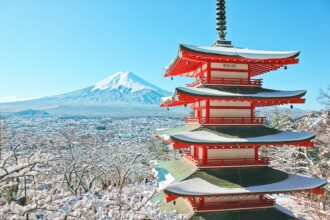
– Mount Fuji (Fuji Five Lakes area): Traffic on Route 139 around Kawaguchiko can back up for hours on weekends.
Hidden gems worth considering:
– Kanazawa: Often called “little Kyoto,” it gets a fraction of the Golden Week crowds. Kenroku-en garden is stunning in early May.
– Matsumoto: A beautiful castle town in Nagano that most international tourists overlook entirely during this period.
– Naoshima Island: The art island in the Seto Inland Sea does get busier, but the experience is still far more serene than any major city.
In my experience supporting expats and visitors in Tokyo, the people who enjoy Golden Week the most are the ones who lean into the local energy rather than fighting it. Local festivals, neighborhood events, and regional matsuri (festivals) happening across Japan during this period offer something packaged tourism rarely does: genuine culture.
Daily Survival Tips for Getting Around
Getting around during Golden Week requires patience and planning. A few practical rules that I follow every year:
– Use IC cards (Suica or Pasmo) for all local transit — fumbling with cash at ticket machines when platforms are packed is a fast way to miss your train.
– Avoid rush hour windows of 8:00–9:30 AM and 5:30–7:30 PM on metro lines, especially the Yamanote Line in Tokyo.
– Convenience stores (konbini) become your best friend — restaurant queues in tourist areas can easily run 60–90 minutes. 7-Eleven, FamilyMart, and Lawson all stock genuinely good hot meals.
– Carry cash (¥10,000–¥20,000) for smaller shops, festivals, and food stalls that don’t accept cards.
– Download Google Maps offline for Japan before you arrive — signal in some rural or underground areas is unreliable.
What Foreigners Often Get Wrong About Golden Week
The biggest mistake I see international travelers make is assuming Golden Week is a great time to tick off every major landmark on their Japan bucket list at once. It isn’t. Trying to do Kyoto, Osaka, Nara, and Tokyo in one Golden Week trip is a recipe for exhaustion and disappointment.
The second most common mistake: not checking whether attractions are actually open. While most tourist spots remain open during holidays, some smaller museums, local restaurants, and neighborhood shops close entirely for the full week as their own holiday. Always check the official website or Google Maps listing before you go.
A third one I want to flag specifically: many foreigners assume that Japan Rail Pass holders can board any Shinkansen freely during Golden Week. While the pass covers most Shinkansen, some trains — including the Nozomi and Mizuho on the Tokaido-Sanyo Shinkansen — are excluded from the JR Pass. Boarding the wrong train by mistake can result in unexpected out-of-pocket charges.
FAQ
Is Golden Week a bad time to visit Japan?
Not at all — it’s actually a wonderful time if you plan ahead. The atmosphere is festive, the weather is usually excellent, and many local events and festivals happen exclusively during this period.
How far in advance should I book hotels for Golden Week?
Ideally 3–4 months in advance, especially for popular cities like Tokyo, Kyoto, and Osaka. For unique accommodation like ryokan or glamping spots, book even earlier.
Does Golden Week affect business hours?
Yes. Major retailers and tourist attractions typically stay open, but smaller businesses, local restaurants, and government offices may close for part or all of the week. Always verify hours before visiting.
Related Articles
If you found this guide useful, you might also want to explore our article on Japan’s public holiday calendar — understanding which days are national holidays (and which are not) will help you plan any trip to Japan, not just Golden Week.
For travelers heading to Kyoto, our Kyoto crowd guide covers the best strategies for visiting iconic sites without the worst of the tourist rush.
And if you’re thinking about visiting Japan in spring more broadly, our article on cherry blossom season timing and forecasts explains how to read the sakura forecast maps and plan your visit around peak bloom.
Conclusion: My Personal Recommendation
If I had to give one piece of advice for surviving — and genuinely enjoying — Golden Week in Japan, it’s this: pick one region and go deep, rather than racing across the country. The people who have the best Golden Week experiences aren’t the ones with the longest itineraries. They’re the ones who stumbled into a neighborhood matsuri, ate too much yakitori, and stayed up watching fireworks with strangers.
Golden Week is chaotic, yes. But it’s also Japan at its most alive.
Start by locking in your accommodation and Shinkansen tickets today — even if your travel dates are months away. That single step will separate a great trip from a stressful one.