
Navigating the Japanese healthcare system can feel overwhelming at first, but once you understand how it works, seeing a doctor in Japan as a foreigner is actually quite manageable. Japan has excellent medical care, with well-trained doctors, modern facilities, and relatively affordable costs compared to many Western countries. The key is knowing where to go, what to bring, and what to expect before you walk through that clinic door.
Understanding Japanese Health Insurance as a Foreigner

If you live in Japan and are registered as a resident, you are legally required to enroll in either the National Health Insurance (NHI / Kokumin Kenko Hoken) or your employer’s company health insurance (Shakai Hoken). This applies to most foreigners on long-term visas, including work, student, and spouse visas.
With NHI, you typically pay 30% of medical costs, while insurance covers the remaining 70%. A standard doctor’s visit at a neighborhood clinic often costs between ¥1,500 and ¥3,000 out of pocket — much less than in many other countries. If you haven’t enrolled yet, head to your local ward or city office (shiyakusho) and bring your residence card and My Number card to register.
Warning: If you visit a doctor without health insurance, you will pay 100% of the bill. A single clinic visit can cost ¥8,000–¥15,000 without coverage, so enrollment is a priority from day one of your residency.
Finding the Right Clinic or Hospital
Japan’s medical system is divided into small neighborhood clinics (クリニック / kuriinikku) and larger hospitals (病院 / byoin). For most everyday illnesses — a cold, fever, stomach pain, or rash — you should visit a clinic first. Going straight to a large hospital for minor issues is not common practice and may result in an extra ¥5,000–¥7,700 initial fee just for walking in without a referral.
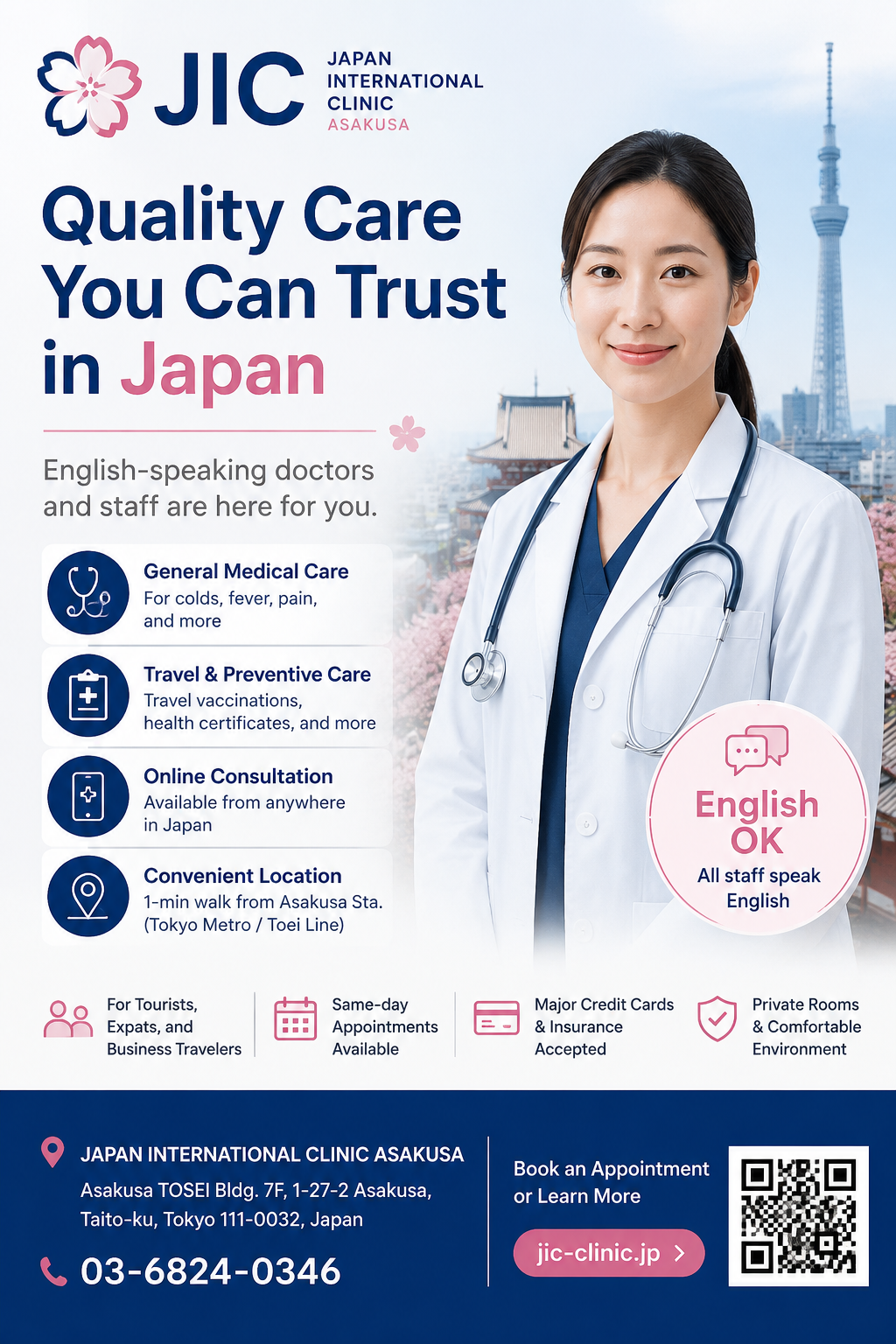
To find an English-speaking doctor near you, check resources like Japan Health Info (jhi.jp), the AMDA International Medical Information Center (03-5285-8088 in Tokyo), or ask your local ward office for a list of multilingual clinics. In major cities, areas like Hiroo and Roppongi in Tokyo have international clinics that regularly treat foreign residents.
For example, if you live in Osaka and need an English-speaking general practitioner, Osaka City General Hospital in Noda has interpreter services available on scheduled days. Calling ahead to confirm English support saves a lot of stress.
What to Bring to Your Appointment
When you arrive at a Japanese clinic for the first time, you’ll need to fill out a registration form (初診票 / shoshinshyo). Always bring the following:
– Your health insurance card (保険証 / hokensho)
– Your residence card (在留カード / zairyu card)
– A list of any current medications (Japanese or English names)
– Your My Number card (increasingly used for digital insurance verification)
– Cash — many small clinics still do not accept credit cards
If your Japanese is limited, write down your symptoms in simple Japanese beforehand or use a translation app like Google Translate’s camera feature to read forms. Some clinics have bilingual staff, but don’t count on it outside of central urban areas.
What to Expect During and After Your Visit
Japanese clinic visits tend to be efficient — sometimes surprisingly so. After registration, you’ll wait to be called, meet the doctor briefly (often 5–10 minutes), and then receive a prescription (shohosen) if needed. You do not pick up medication at the clinic itself. Take your prescription to any nearby pharmacy (yakkyoku), which you’ll almost always find within a short walk of any clinic.
Doctors in Japan may not always explain diagnoses in great detail, which can feel abrupt if you’re used to longer consultations elsewhere. Don’t hesitate to ask questions using simple language, or bring a bilingual friend if possible. Some clinics also offer online consultations (online shinsatsu) for follow-ups, which became widely available after 2020.
FAQ
Do I need to make an appointment to see a doctor in Japan?
Many small clinics in Japan accept walk-in patients, especially in the morning. However, booking in advance by phone is recommended during flu season (December–February) or if you need a specialist. Some clinics now use online booking systems — look for a “予約” (yoyaku / reservation) button on their website.
What if I need emergency medical care?
Call 119 for an ambulance in Japan — it’s free to dispatch. For non-life-threatening urgent care outside clinic hours, look for kyukyu byoin (救急病院), which are 24-hour emergency hospitals. Tokyo has a useful hotline — #7119 — that helps you decide whether to call an ambulance or find a nearby open clinic.
Can I see a doctor in Japan if I don’t speak Japanese?
Yes, absolutely. While many general practitioners have limited English, international clinics in most major cities offer fully English-speaking services. The AMDA International Medical Information Center provides phone interpretation support in multiple languages. Preparing a written summary of your symptoms in Japanese using a translation app also goes a long way.
Conclusion
Seeing a doctor in Japan as a foreigner is far less intimidating once you know the steps — enroll in health insurance, find a local clinic, bring the right documents, and manage expectations about communication. Japan’s healthcare is genuinely high quality, and with the right preparation, you can get the care you need with minimal stress.
Your next step: if you haven’t enrolled in National Health Insurance yet, visit your local city or ward office this week. And bookmark a nearby clinic before you actually need one — you’ll thank yourself later.