
If you ask most international travelers about Japan, they’ll mention Tokyo, Kyoto, or Osaka. Kanazawa rarely makes that first list — and honestly, that’s exactly why I love recommending it. This Kanazawa travel guide exists because the city genuinely deserves more attention from tourists who want something deeper than the well-worn Golden Route. I visited Kanazawa for the first time with a colleague from my startup days, and within an hour of arriving, we both agreed it felt like Kyoto must have felt decades ago — culturally rich, visually stunning, and refreshingly uncrowded.
Located on the Sea of Japan coast in Ishikawa Prefecture, Kanazawa is approximately a 2.5-hour ride from Tokyo on the Hokuriku Shinkansen. It’s accessible, it’s beautiful, and it has a story most foreigners haven’t heard yet.
Why Kanazawa Should Be on Your Japan Itinerary

Kanazawa was one of the few major Japanese cities that escaped bombing during World War II, which means its historic districts survived largely intact. That history is alive everywhere you walk. The city was historically ruled by the Maeda clan, the most powerful feudal lords outside the Tokugawa shogunate, and their patronage of arts like Noh theater, Kenroku-en garden design, and Kaga Yuzen silk dyeing left a cultural legacy that’s still visible today.
According to the Japan Tourism Agency, Kanazawa is consistently ranked among Japan’s top regional tourism destinations, and visitor numbers have grown steadily since the Hokuriku Shinkansen extension opened in 2015. As of 2026, the line has further expanded toward Osaka, making Kanazawa even more convenient to reach from western Japan.
The city is compact enough to explore in two to three days, making it a perfect addition to a two-week Japan itinerary.
The Top Attractions You Shouldn’t Miss
Kenroku-en Garden
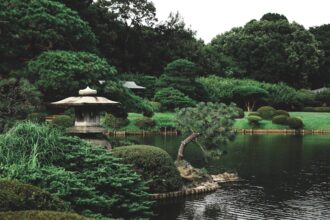
Kenroku-en is considered one of Japan’s Three Great Gardens (Nihon Sankei-en), alongside Korakuen in Okayama and Kairaku-en in Mito. Admission is ¥320 for adults, and it’s worth every yen. I’ve visited in autumn when the maples turn red and the iconic Kotoji stone lantern reflects in the pond — it’s one of those views that stays with you.
Higashi Chaya District
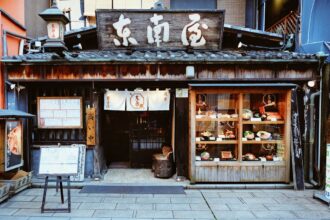
This is the city’s best-preserved chaya (teahouse) district, where geisha culture still quietly exists. The wooden lattice facades, narrow lanes, and matcha tea shops create an atmosphere that feels genuinely historical, not staged. Many visitors come here for gold leaf soft-serve ice cream (yes, edible gold leaf — Kanazawa produces over 99% of Japan’s gold leaf), which has become one of those absurdly photogenic Japan moments.
Kanazawa Castle Park and the 21st Century Museum of Contemporary Art
These two sit close together near the city center and make for a half-day pairing. The 21st Century Museum (known locally as Nijusseiki Bijutsukan) charges ¥1,600 for the paid exhibition zone, but the free permanent zone alone is worth a visit. The circular building design is genuinely unlike anything else I’ve seen in Japanese architecture.
Omicho Market
Omicho (近江町市場) is Kanazawa’s main fresh market and has been running for over 280 years. Seafood from the Sea of Japan — including the prized Kano-gani (snow crab, in season from November to March) — is sold fresh here. Come for breakfast or early lunch if you want the best selection and the full atmosphere.
Getting Around Kanazawa
Kanazawa is a surprisingly walkable city for its top attractions, but a few transit tips will save you real time and money.
The Kanazawa Loop Bus is the easiest way to connect major tourist spots. A one-day pass costs ¥600 and covers routes hitting Kenroku-en, Higashi Chaya, Omicho Market, and the contemporary art museum. The buses run every 15 minutes at peak times and are well-labeled in English.
If you’re arriving from Tokyo, a reserved seat on the Hokuriku Shinkansen costs around ¥13,850 one way in standard class. Book through the JR website or at any major station ticket office — and if you’re using a JR Pass, confirm in advance which trains and seat classes are covered.
For day trips, Kanazawa also works well as a base for visiting the Noto Peninsula or the Kenroku-en area in different seasons.
What Foreigners Often Get Wrong About Kanazawa
The most common mistake I see travelers make is treating Kanazawa as a one-day stop on the way somewhere else. That’s not enough time.
Most people rush Kenroku-en in 45 minutes, skip Omicho Market entirely, and miss the Nagamachi samurai district (武家屋敷跡) just south of the castle. Nagamachi has earthen walls, narrow canals, and preserved samurai residences — including the Nomura Samurai House, which charges ¥550 entry and gives you a much more intimate glimpse into feudal life than many busier sites in Kyoto.
The second mistake is visiting only in summer. Kanazawa in winter — particularly from December to February — is genuinely magical. Snow settles on Kenroku-en’s pine trees, the markets are full of seasonal seafood, and the crowds thin dramatically. Yes, it’s cold (temperatures can drop to 2-3°C), but it’s also when the city feels most like itself.
Finally, don’t underestimate the food scene. Kanazawa’s cuisine is called Kaga Ryori and it’s distinct from anything you’ll find in Tokyo or Osaka. Dismissing it as “just Japanese food” is a real loss.
FAQ
How many days should I spend in Kanazawa?
Two full days is the realistic minimum to see the major attractions without rushing. Three days lets you add a day trip to the Noto Peninsula or properly explore the city’s food culture.
Is Kanazawa covered by the JR Pass?
Yes, the Hokuriku Shinkansen from Tokyo to Kanazawa is covered by the national JR Pass. Always confirm with JR before travel, as pass terms can update.
Is English widely spoken in Kanazawa?
Less than Tokyo, but more than many rural areas. Major tourist attractions and most hotels have English signage. The Loop Bus is fully labeled in English. Learning a few basic Japanese phrases will genuinely help and go a long way with locals.
Related Articles
If you’re building a broader Japan itinerary, you might also want to read our guide to traveling the Hokuriku region, which covers Kanazawa alongside Toyama and Fukui. For travelers deciding how to split time between destinations, our Kyoto vs. Kanazawa comparison offers a practical breakdown of what each city does best. And if you’re planning the logistics of getting around central Japan, our Hokuriku Shinkansen guide has full fare and route information.
Conclusion: My Honest Recommendation
Kanazawa is the kind of Japanese city that rewards travelers who slow down. It doesn’t have the flash of Tokyo or the name recognition of Kyoto, but it has something those cities have partially lost: a sense of living culture that hasn’t been fully optimized for tourism yet.
I’ve recommended Kanazawa to at least a dozen friends and colleagues over the years, and not one of them came back disappointed. Most said they wished they’d stayed longer.
If you’re planning a trip to Japan and have at least two weeks, add Kanazawa. Two to three nights is enough to leave with a genuine impression of one of Japan’s most underrated cities.
Ready to plan your Kanazawa trip? Browse our full Kanazawa section on j-nav.com for accommodation picks, restaurant recommendations, and a printable day-by-day itinerary built for international visitors.